Home / Red Centre Trip Inspiration
INSPIRATION — ROCK, CANYON, ROAD AND NIGHT SKY
RED CENTRE TRIP INSPIRATION
Before you compare departure points and inclusions, it helps to picture the trip. This is a reference wall for Australia’s Red Centre: the rock, the domes, the canyon rim, the long road between them and the nights in camp. Each reference links to the guide that turns a picture into practical questions for your three-day Uluru tour.
ULURU — KATA TJUTA — KINGS CANYON — THE ROAD — UNDER THE STARS — ULURU — KATA TJUTA — KINGS CANYON — THE ROAD — UNDER THE STARS —
REGION 02 — ULURU AND KATA TJUTA
KATA TJUTA
Big rounded red domes rising behind golden grass and low bush, under a pale, overcast sky. Kata Tjuta is the name most travellers say alongside Uluru. Whether a tour includes a walk here, and what that walk asks of you, is one of the details that differs between itineraries.
Reference photo: the domes of Kata Tjuta behind golden grass and low bushland.


REGION 03 — KINGS CANYON
KINGS CANYON
Layered red sandstone walls and rocky formations, with trees filling the gorge below. Plenty of travellers want Kings Canyon in their three days, and it’s where walking demands matter most. Check which walk is planned, when it starts and what the alternative is if it isn’t right for you.
Reference photo: layered sandstone canyon walls above a tree-filled gorge at Kings Canyon.
REGION 01 — DEPARTURE LOCATIONS
THE ROAD
A red dirt road running across an open, dry plain towards blue ranges on the horizon, with only scattered trees along the way. Distances in the Red Centre are long, and time on the road is part of any multi-day trip. Where your tour starts and finishes shapes how much of that road you’ll see.
Reference photo: a remote outback dirt road heading towards distant ranges.

REGION 02 — ULURU AND KATA TJUTA
THE ROCK AT THE CENTRE OF IT
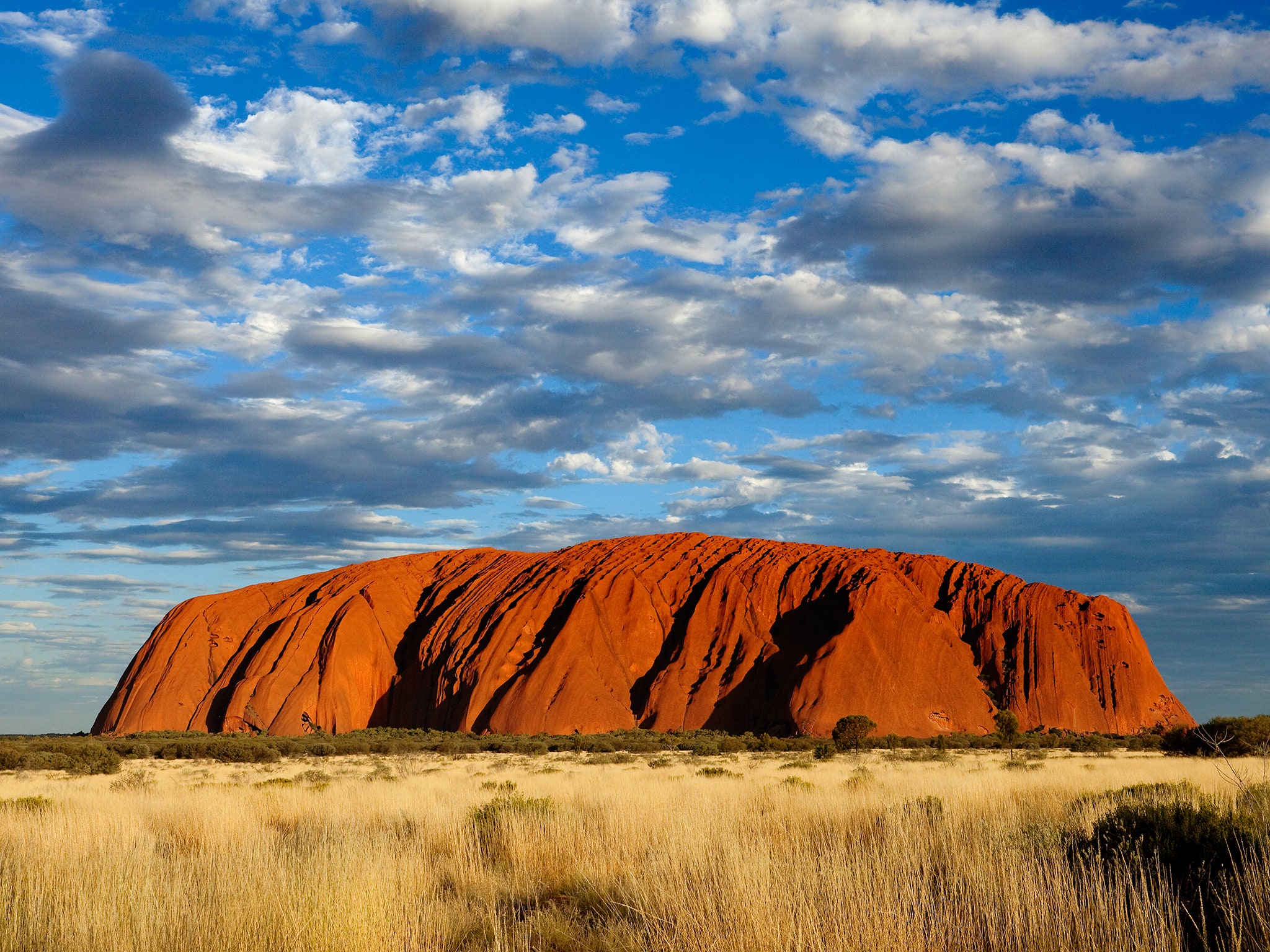
Most three-day itineraries are built around time at Uluru, but how much time, and at what hour, can vary from tour to tour. When you read an itinerary, look for when you arrive in the park and how the days are split between Uluru and Kata Tjuta. For park rules, cultural guidance and current conditions, check the official park information before you travel.
Reference photo: Uluru rising from golden grassland beneath a cloud-filled sky.
CHAPTER 01 — ULURU CAMPING TOURS
NIGHTS UNDER THE STARS
For some travellers, the night sky is the reason to choose a camping-style tour. Sleeping arrangements differ, though: what you sleep in, what bedding is supplied and which facilities are nearby are all questions for the operator. If you’d rather have a bed and a roof, an accommodation-based package is the other way to do it.
Reference photo: the Milky Way above a dark desert campsite with tents and a vehicle.

SAME NAME ≠ SAME TOUR
FROM PICTURE TO PLAN
Once you know what you want to see, six lines on an itinerary tell you whether a tour fits. Tours with similar names and durations can still differ on every one of them. We bring carefully selected three-day Uluru tours from independent Australian tour operators into one place so you can compare them side by side.
DEPART Where does the tour start, and does that suit how you’re arriving?
FINISH Does it end back in Alice Springs or somewhere else?
DRIVE How much of each day is spent on the road?
WALK Which walks are planned, and what do they ask of you?
SLEEP Camping or accommodation, and what’s supplied?
INCLUDED Which meals, entries and activities are covered, and which aren’t?
KEEP READING
How to Choose a Three-Day Uluru Tour
What’s Included? Questions to Ask Before You Book
Uluru Day Tours · Private Uluru Tours
Red Centre Destinations & Departure Guide · How Booking Works
Found a tour and have a question about it? Send us an enquiry. An enquiry isn’t a booking confirmation. Bookings are made through the applicable booking system or independent tour operator.